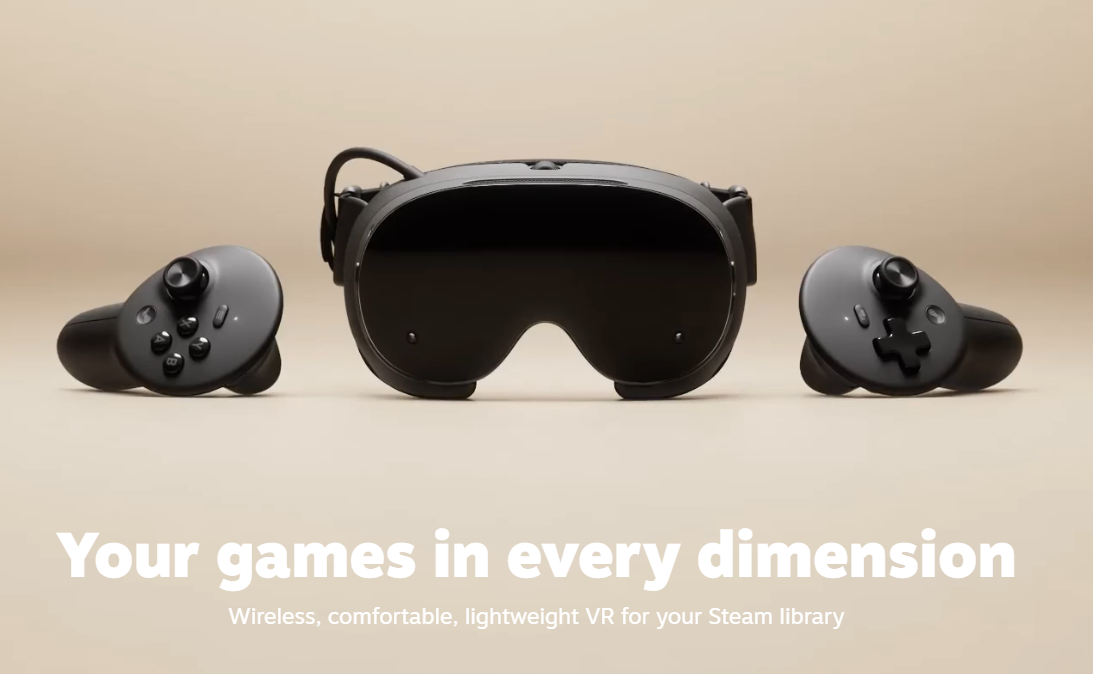
The Steam Frame feels like Valve finally decided to build a headset for people who don’t just want VR — they want freedom. Freedom from the monitor, freedom from the desk, freedom from the “VR must be tethered” mindset, freedom from Meta. And for me, freedom means one other thing: slaying the beast that is No Man’s Sky VR.
The Technology That Makes Steam Frame Different
Valve didn’t just make another VR headset. They built a streaming-first, foveated-rendering-powered hybrid that can operate as:
- a wireless PC VR headset
- a standalone gaming device
- a portable Steam library viewer
- a dark‑room, lying‑in‑bed gaming machine
All in one frame.
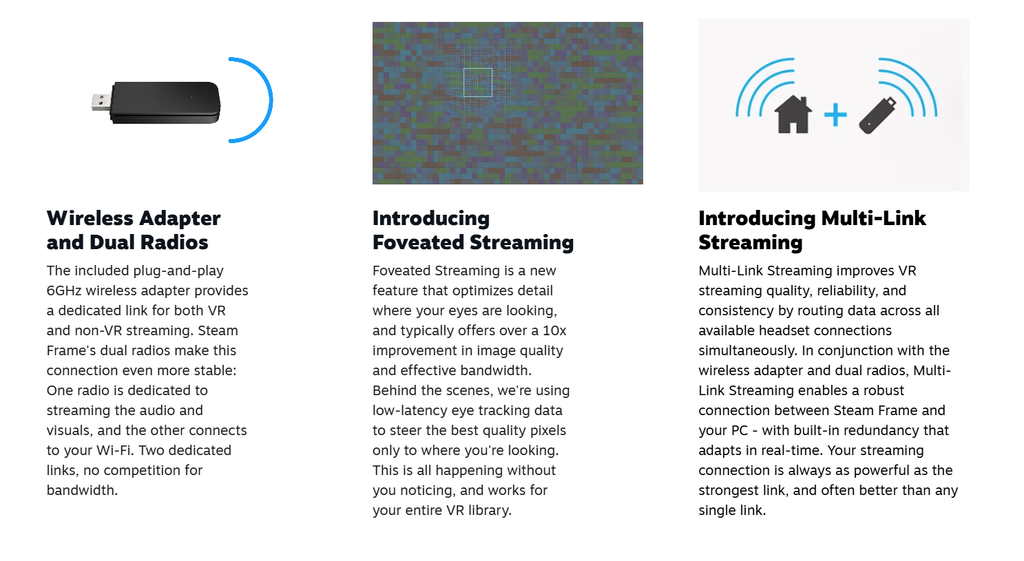
Foveated rendering
This is the magic trick. Steam Frame tracks your eyes and renders only the area you’re looking at in full resolution. Everything else gets dialed down. That means:
- lower GPU load
- higher frame stability
- better battery life
- less heat
- smoother VR streaming
For a game like No Man’s Sky VR — a title infamous for brutal CPU spikes, procedural streaming stalls, and VRAM thrashing — foveated rendering could be the difference between “barely playable” and “finally tamed.”
Steam Link streaming
Valve’s streaming pipeline is already one of the best in the industry, but Steam Frame pushes it further with:
- low‑latency Wi‑Fi 6E
- dynamic bitrate scaling
- eye‑tracked foveated compression
- per‑eye adaptive resolution
This is exactly the kind of tech that might let me finally slay No Man’s Sky VR, especially during those hellish moments:
- atmospheric entry
- biome transitions
- warp tunnel streaming
- space station loading
If Steam Frame can keep the GPU fed and the frames stable, I might actually get the smooth VR experience I’ve been chasing for years.
Playing in the Dark, Playing in Bed
One of the Steam Frame’s underrated superpowers is how it fits into real life.
Playing in the dark
No monitor glow. No desk setup. No cables. Just slip it on and you’re in your Steam library instantly.
Playing while lying flat in bed
This is the part that feels almost illegal. The idea of booting up my entire Steam library while lying flat — not propped up, not sitting, just flat — is something I’ve wanted for years. Steam Frame finally makes it a reality.
Why I Bought the Expensive 1TB Version
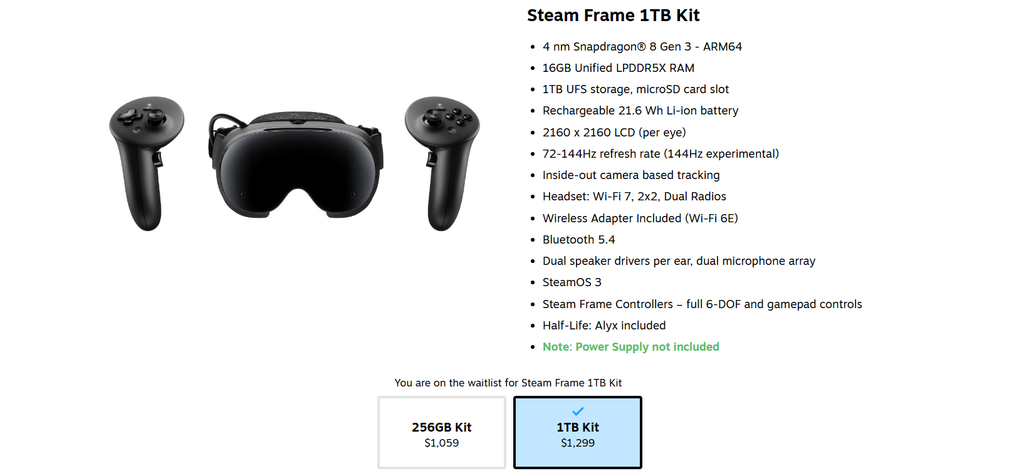
I’m not a fan of the price. Valve definitely aimed high here, due to RAM prices skyrocketing.
But I picked the 1TB model because:
- I want room for standalone games
- I want space for VR titles
- I want to experiment with standalone VR mods
- I don’t want to constantly delete and reinstall
- I want the freedom to load up games for travel
Storage anxiety kills the fun. The 1TB version solves that problem upfront.
Standalone Mode: The Feature I Didn’t Care About… Until Now

Originally, I didn’t care about standalone functionality. I saw Steam Frame as a streaming device — nothing more.
But foveated rendering changes the equation.
Suddenly, standalone gaming feels possible:
- lighter GPU load
- smarter rendering
- better battery efficiency
- more stable frame pacing
Now I’m imagining:
- playing Hades on a long flight
- exploring indie games during a vacation
- running emulators without a PC
- using it as a portable Steam Deck for VR and flatscreen titles
I didn’t expect to want standalone mode. Now I’m thinking it might become a key feature.
The Steam Frame Waitlist Rollercoaster
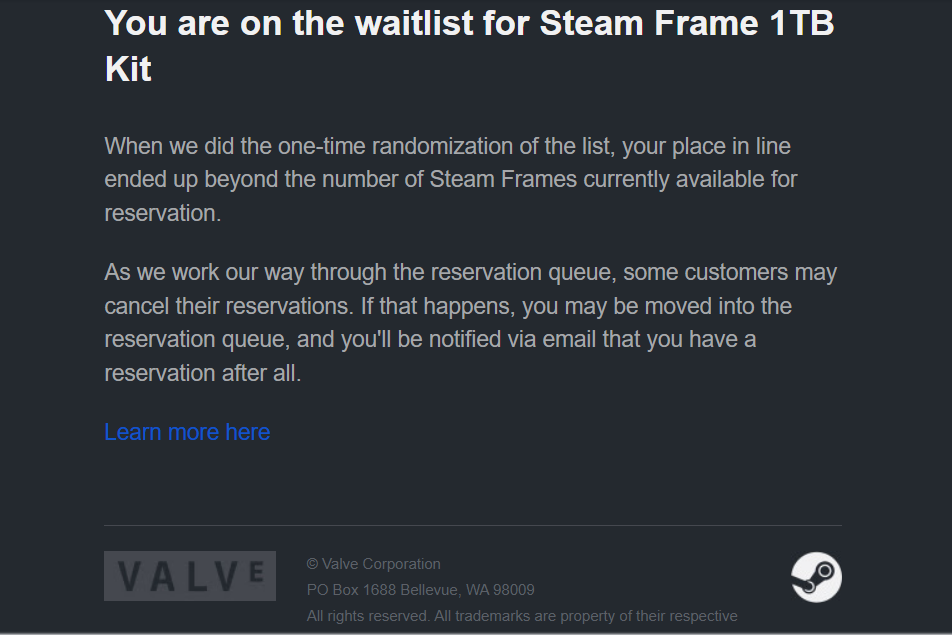
I joined the waitlist the moment it opened. I was ready. I was hyped. I wanted to be part of the first wave.
But the random luck wasn’t with me.
Instead of a reservation email, I got the waitlist email — the “maybe later” message. And now I’m worried that means I won’t get one this year. Valve’s distribution is famously unpredictable, and Steam Frame demand is clearly massive.
There’s still hope, but it’s a slow burn. Every day I check my inbox like I’m waiting for a mythical prophecy.
Why Steam Frame Matters
Steam Frame isn’t just another VR headset. It’s a device built around how people actually play:
- in bed
- in the dark
- on vacation
- on the couch
- on the go
- streaming from a PC
- playing standalone titles
- experimenting with VR tech
- chasing performance dragons like No Man’s Sky VR
It’s a headset designed for real life, not just ideal conditions.
And for me, it’s a chance to finally conquer the one VR game that has eluded me for years — the procedural, streaming‑heavy, CPU‑spiking monster that is No Man’s Sky VR.
If Steam Frame can handle that, it can handle anything (in PCVR).