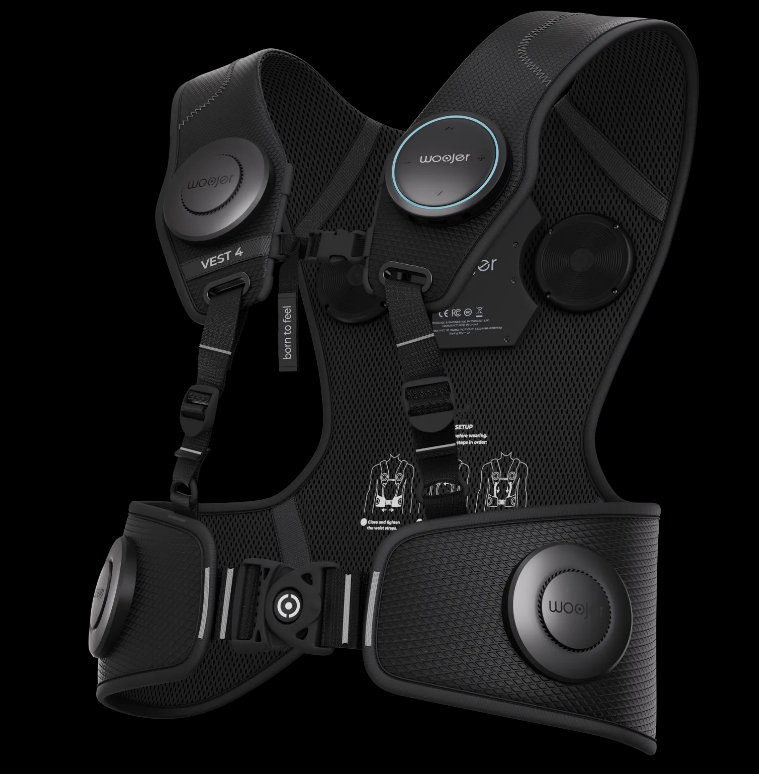
When my wife gave me a Woojer Vest 4 for Christmas, I wasn’t entirely sure what to make of it.
Part of the confusion was that she thought it was a VR haptic vest, something designed specifically to work with VR games and provide physical feedback from events happening inside the virtual world. While that description isn’t completely wrong, it’s also not really what the Woojer Vest 4 is.
The Woojer Vest 4 isn’t a traditional haptic vest that receives positional data from a game. Instead, it converts audio into physical sensations. Every explosion, engine roar, bass drop, gunshot, or impact gets translated into vibrations and low-frequency feedback across your torso. Because it works from audio rather than game-specific integrations, it can be used with virtually anything that outputs sound.
What Is the Woojer Vest 4?
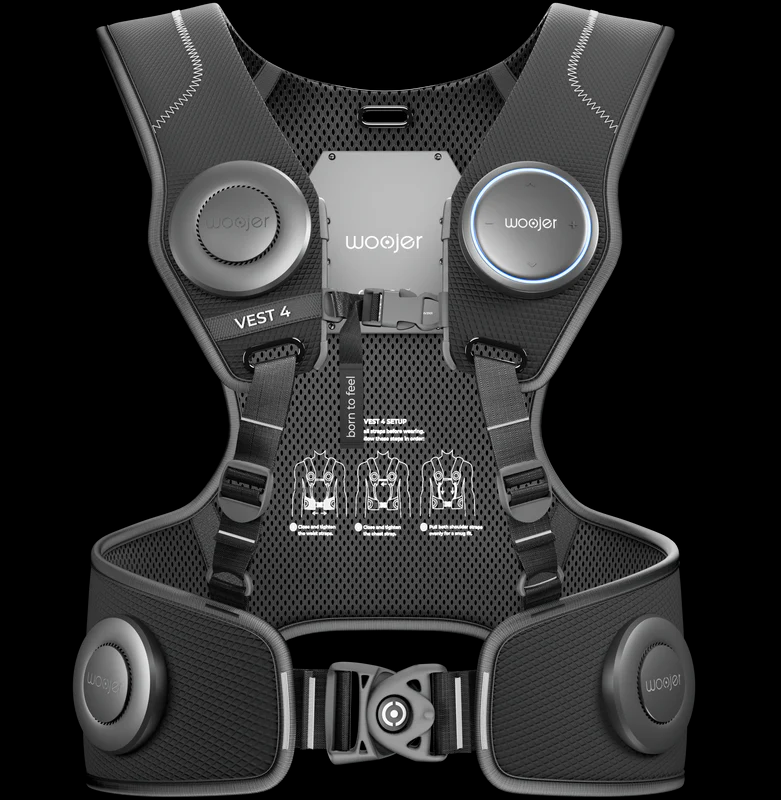
The Woojer Vest 4 is a wearable haptic device that uses six patented OSCI™ haptic zones positioned around the body to transform low-frequency audio into physical sensations. It supports Bluetooth 5.0, USB-C digital audio, and standard 3.5mm audio connections, while also allowing headphones to be connected through the vest itself.
Some notable specifications include:
- Six OSCI™ haptic transducers
- 360-degree haptic coverage around the torso
- 1Hz to 250Hz haptic frequency response
- Bluetooth 5.0 connectivity
- USB-C digital audio support
- 3.5mm analog audio input
- Bluetooth headphone support
- Independent audio and haptic intensity controls
- Up to 10 hours of battery life
Those specifications sound impressive on paper, but honestly, none of that made me understand why people spend hundreds of dollars on one.
Actually using it did.
Getting Woojer Vest 4 Working with the Quest 3
My primary use case at first was VR.
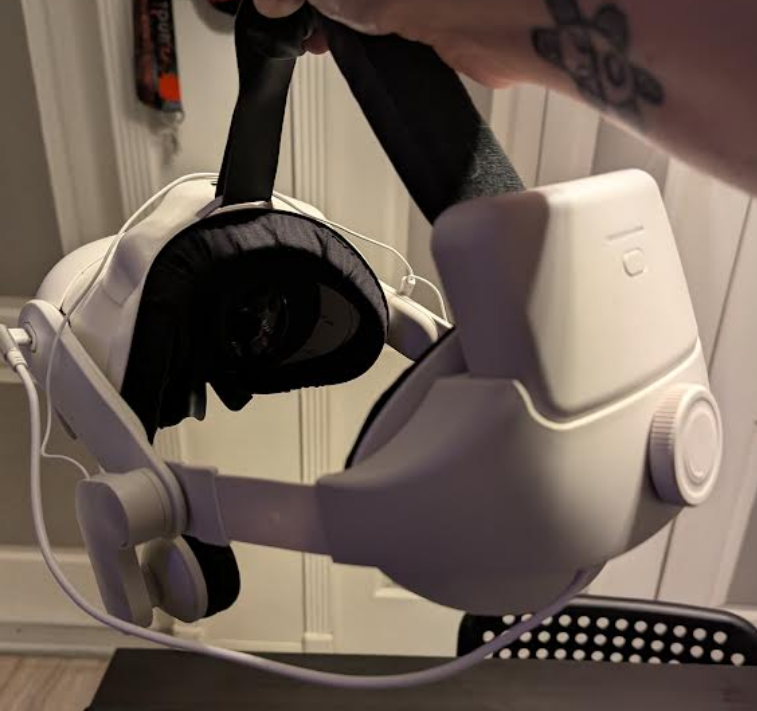
I use a Meta Quest 3 with a premium head strap that has integrated speakers, which complicated things a bit. Since the Woojer relies on audio input, I had to use a splitter audio cable to feed sound both to my headset speakers and to the vest.
It wasn’t necessarily the cleanest setup, but once everything was connected, it worked surprisingly well.
The experience was interesting immediately, but there was one moment that completely sold me on the concept.
Iron Man VR Changed My Mind
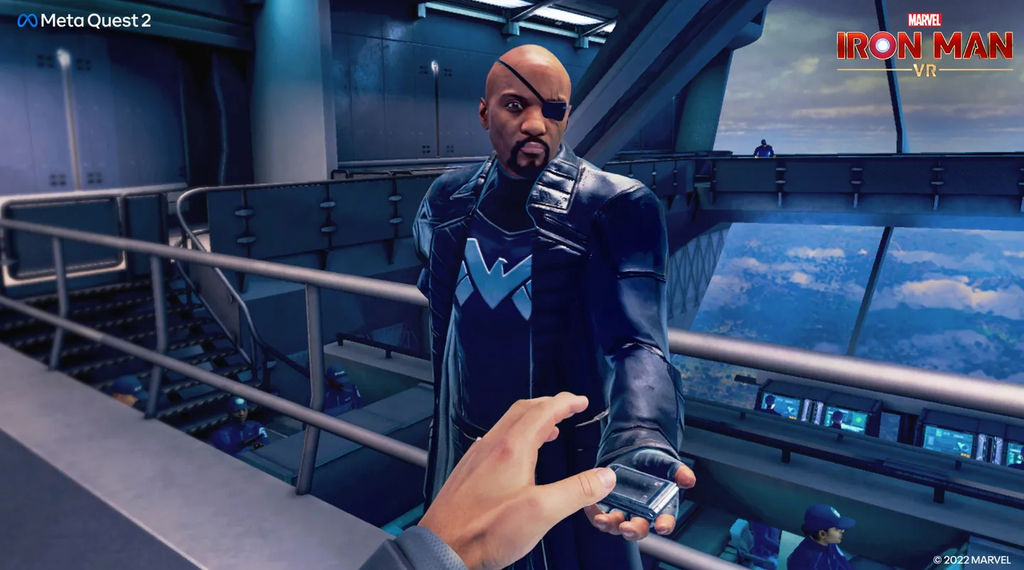
The game that convinced me the Woojer wasn’t just another gimmick was Iron Man VR.
The first time I launched into the air and fired the repulsors from Iron Man’s hands, I could physically feel the energy pulses rumbling through my body. Every boost, impact, and explosion suddenly had weight behind it.
That was the moment when I finally understood what the Woojer is actually trying to accomplish.
It’s not about simulating touch.
It’s about making sound physical.
After that experience, going back to regular headphones felt like something was missing.
My Reluctance to Use It on PC
Ironically, despite enjoying it in VR, I hesitated for quite a while before setting it up on my gaming PC.
The biggest issue was audio management.
I use an Xbox wireless headset on my PC, and one of the Woojer’s features is the ability to connect your headset to the vest via Bluetooth while the vest connects to your PC. In theory that’s convenient.
In practice, it meant my headset would effectively depend on the Woojer. If I wanted audio, I’d need the vest powered on. If I didn’t want to use the vest, I’d need to reconnect the headset directly to the PC again.
That sounded annoying enough that I kept putting off the setup.
Eventually I gave it a shot.
To my surprise, Bluetooth latency wasn’t nearly as bad as I expected.
Still, after experimenting, I ultimately switched to a direct wired connection, and that’s when I really started appreciating what the Woojer could do outside of VR.
Forza Horizon Hit Different

One of the first games I tried on PC was Forza Horizon.
The experience with American muscle cars was incredible.
Every engine rev produced a deep rumble through the vest. Hard launches, gear changes, and high-RPM acceleration suddenly felt far more substantial than what speakers or headphones alone could deliver.
The sensation wasn’t distracting or artificial.
It simply added a layer of physical presence that standard audio lacks.
The only downside I discovered during longer sessions was heat. Like many users have reported, the vest can get fairly warm after extended use.
I eventually found my sweet spot by reducing the haptic intensity a couple of clicks. Running it slightly below maximum still provided plenty of impact while keeping things more comfortable.
Great for Modern Shooters

More recently I’ve been using the Woojer with games like Call of Duty and Gears of War: E-Day.
This is where the audio-to-haptics approach really shines.
You feel:
- Earthquakes and environmental effects
- The crack and punch of gunfire
- Heavy explosions
- Vehicle impacts
- Enemy footsteps
- Incoming artillery
Even subtle sounds take on a physical presence.
Instead of just hearing a distant explosion, you feel it rolling through your body.
It’s one of those things that’s hard to appreciate until you experience it yourself.
Making It Work on Xbox Series X
After seeing how well it worked on PC, I wanted the same experience on my Xbox Series X.
Initially, that seemed impossible.
Xbox has strict audio device support and generally doesn’t allow just any third-party audio hardware to connect directly unless it’s certified.
For a while I assumed I was out of luck.
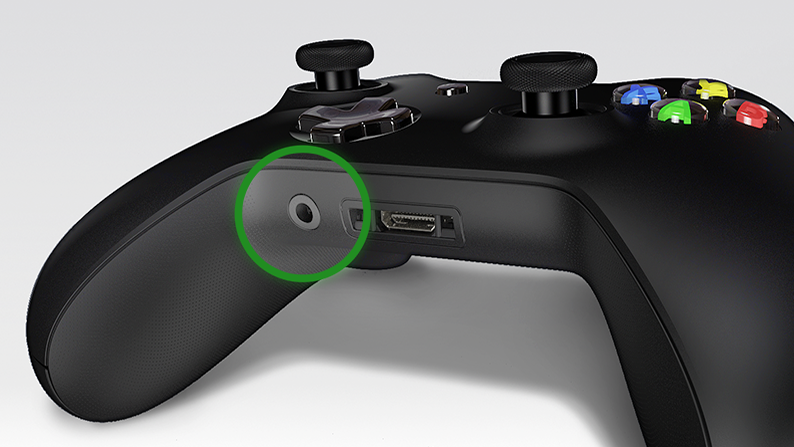
Then I remembered something simple: my Xbox controller has a 3.5mm headphone jack.
I connected the Woojer through the controller, and it worked.
At first the effect felt significantly weaker than on PC, which was disappointing.
Later I discovered the problem wasn’t the vest at all.
I had forgotten that Xbox lets you independently adjust headphone volume through the controller settings. After increasing the headphone output volume, the Woojer came alive and started delivering the experience I was expecting.
The audio quality through the controller isn’t quite as clean as my PC setup, but the haptic experience remains excellent and absolutely worth using.
Surprisingly Fun for Music
One use case I didn’t expect to enjoy was music.
I paired the Woojer to my phone and spent some time listening to bass-heavy tracks.
The sensation is difficult to describe.
It’s somewhere between wearing a personal concert speaker system and feeling like you’re standing directly in front of a subwoofer at a live event.
The experience was genuinely wild.
That said, I don’t spend a lot of time sitting around listening to music at home, so it isn’t something I use regularly. For music enthusiasts, though, I can absolutely see the appeal.
Is the Woojer Vest 4 Worth It?
This is where things get complicated.
At full retail, around the $400 mark, I honestly don’t know if I would have bought one for myself.
But as someone who has now spent significant time with it, I can confidently say it’s much more useful than I initially assumed.
The biggest strength of the Woojer Vest 4 is that it doesn’t rely on game support.
Traditional haptic vests often need special integrations, software support, or developer implementation.
The Woojer doesn’t care.
If the device outputs stereo audio, the Woojer can work with it. The better quality the audio is though, the better the experience.
That means it works with:
- VR headsets
- Gaming PCs
- Xbox consoles
- PlayStation consoles
- Switch
- Steam Deck
- Smartphones
- Movies
- Music
- Virtually anything else with audio output
So while it isn’t a true VR haptic vest in the traditional sense, that’s actually its greatest advantage.
The flexibility means you can use it everywhere.
Final Verdict
When I unwrapped the Woojer Vest 4 on Christmas morning, I genuinely wasn’t sure why my wife bought it for me.
Now I get it.
The vest adds something that speakers, headphones, and surround sound systems simply cannot provide: physical presence.
Feeling Iron Man’s repulsors fire through your chest, experiencing the roar of a muscle car in Forza Horizon, sensing nearby footsteps in Call of Duty, or hearing music as something you can physically feel changes the experience in a way that’s difficult to explain until you’ve tried it yourself.
Would I pay full price for it? Maybe not.
Would I recommend grabbing one during a sale or conveniently letting a spouse buy one as a Christmas gift?
Absolutely.
The Woojer Vest 4 turned out to be one of those rare gadgets that went from “Why would I need this?” to “I don’t really want to play certain games without it anymore.”